

Why Is Walking on a Roof Risky for Cicero, NY Residents?
Walking on a roof always carries some degree of risk, even for experienced homeowners. Most residential roofs in Cicero are angled rather than flat, naturally increasing the risk of slip-and-fall accidents compared to walking on ground level. Seasonal conditions—like icy winters and wet springs—can also make surfaces more hazardous. Homeowners in older neighborhoods may find that roof materials or structures are less stable than they appear from the ground.
It only takes a minor misstep on a slope or a patch of moss to lose footing. The risk of serious injury means extra steps are needed to move safely and confidently.
What Should You Check Before Stepping Onto Your Roof?
Always inspect both the roof and your surroundings before attempting to walk on it. Walk-around checks from ground level are a first defense against unsafe surprises.
Start by reviewing:
- Weather: Wait for clear, dry conditions. Roofing in Cicero can become unexpectedly slick from early morning dew, previous rainfall, or melting snow. Residual frost is common through late spring.
- Roof Condition: Look for curling shingles, loose tiles, soft spots, or visible sagging. These are signs of structural issues and indicate a section may not support your weight.
- Moss and Debris: Noticeable green patches or piles of wet leaves increase slip risk, especially after autumn leaf fall or in shady yards.
- Roof Pitch: Roofs in this region commonly range from gentle to steep. Anything steeper than a standard “4:12” pitch (4 inches rise per 12 inches run) is much more challenging to navigate, especially without specialized footwear or equipment.
- Edge Awareness: Observe how close eaves, gutters, or low-hanging branches are to ground-level walkways, as these could be trip hazards on the way up or down.
If anything looks suspect or unstable, treat the area with caution. If structural integrity is in doubt—such as visible rot or sagging—do not proceed.
Which Footwear and Clothing Are Safest?
Roofing safety starts with appropriate gear. The goal is to maximize grip, stability, and mobility while minimizing the chance of tripping or snagging.
Choose:
- Sturdy shoes or boots with soft, rubberized soles for maximum traction (heavy-tread sneakers work better than smooth-soled dress shoes)
- Clothing that’s lightweight, close-fitting, and flexible (to avoid getting caught on shingles or gutters)
- Gloves with textured grips for steadier balance when using hands for support
- Avoid sandals, flip-flops, or anything else open-toed or loose
In colder months, local residents should select insulated and waterproof footwear. Even short walks on frosty or snow-dusted roofing materials require extra protection from slipping.
How Should You Set Up Ladders for Safe Roof Access?
Most falls occur while getting on or off the roof—not while walking across it. Ensuring safe ladder setup is vital, especially on uneven lawns, patios, or driveways common in the area.
Best practices include:
- Place the ladder on flat, solid ground; avoid mud, gravel, or mulch beds that can shift or sink
- The top of the ladder should extend at least three feet above the edge of the roof for safer maneuvering
- Anchor the feet of the ladder or have someone steady the base if possible
- Maintain a 75-degree angle (for every 4 feet of height, the base should sit 1 foot out from the wall)
- Keep hands free while climbing; carry tools using a tool belt or haul line
Tree branches, nearby power lines, or rain gutters can all create ladder hazards after storms or high winds—check these in advance.
Are There Places on Roofs You Should Avoid Walking?
Not all roof areas are equally safe to support weight. Homeowners in Cicero typically deal with asphalt shingles, but some census-era houses have slate, wood shake, or metal roofing—all of which pose distinct challenges.
- Avoid valleys (where two roof sections meet); water flow and debris tend to degrade these areas faster.
- Stay clear of eaves and overhangs; while visually accessible from the ladder, these zones are among the least able to bear extra weight.
- Steer away from visibly patched areas, vent pipes, and skylights. Transitions and penetrations are common failure points.
- Don’t walk over visibly sagging or soft spots—these often mask structural rot or weakened support below.
If roof framing is uncertain or you’re inspecting after a major storm, extra caution is warranted since unseen damage may be present.
What’s the Safest Way to Move While on the Roof?
Start by distributing your weight across as much surface area as practical. Walk gently and keep your center of gravity low.
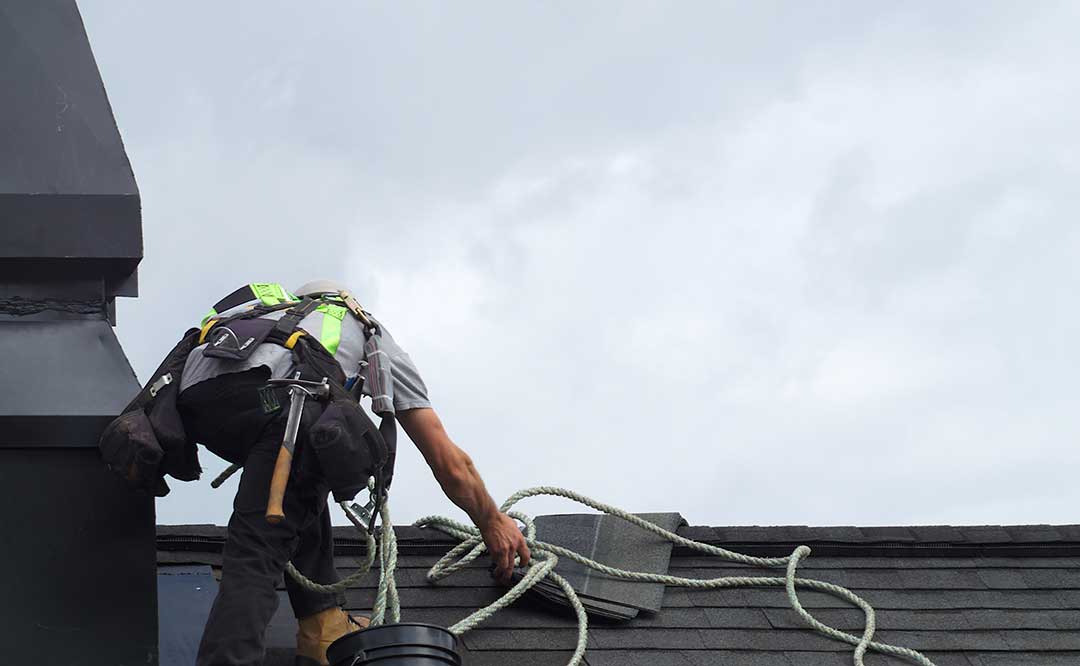
Key tips:
- Move deliberately, never rushing; avoid hopping or sudden turns
- Keep feet flat and step horizontally across the slope instead of directly up or down
- Stay closer to the peak or ridge line, which is more structurally sound
- Use hands for balance if needed; crouching may help maintain stability on steeper surfaces
- Always know your path off the roof before beginning
Carrying tools or materials? Use a tool belt or bucket attached to a rope to avoid dropping items or creating tripping hazards. After strong winds or hail, stick to simple tasks and avoid unnecessary walking.
Are Fall Protection Systems Needed on Residential Roofs?
For brief inspections at low heights, it’s common for local homeowners to work without harnesses or ropes. However, any task requiring extended movement or work on steep or high sections makes fall protection a smart precaution.
- If using safety gear, anchor it to a solid roof truss or other reliable structural element—not just a vent pipe or gutter.
- Roof anchor kits, harnesses, and lanyards should be rated for residential use and meet recognized safety standards.
- Never tie off to a chimney unless it has been professionally tested for stability.
Families in the community with children, pets, or frequent distractions nearby should be extra cautious, as falls can happen quickly. Even a short tumble from a single-story roof can cause serious injury.
What Common Mistakes Should Cicero Homeowners Avoid?
Quick fixes and shortcuts are frequent causes of injuries. A few hazards to avoid include:
- Climbing onto the roof while surfaces are still wet or frost-covered after a cool morning
- Using a ladder of insufficient height, requiring a precarious step onto the roof’s edge
- Wearing smooth-soled or ill-fitting shoes
- Attempting repairs or inspections during windy days, which are frequent in the late fall and early spring
- Walking backward or not watching where you step, especially near debris, branches, or loose materials
Local residents should keep in mind that safety takes priority over speed or convenience, especially given the seasonal weather variability in the region.
When Is It Safer Not to Walk on the Roof Yourself?
If there’s any uncertainty about roof structure, personal balance, or weather conditions, it’s wise to hold back. This is especially true after winter ice storms, severe wind events, or if extensive moss, algae, or loose shingle granules are visible from the ground.
Older homes in the area may have hidden wood rot, and smaller outbuildings or garages may lack the support of modern framing. If in doubt, choose safety over risk.
